New Delhi, February 2026.
The India AI Impact Summit 2026 marks a
defining moment in the convergence of AI, semiconductor strategy, and trusted
global technology partnerships. With participation from over 20 Heads of State,
60 Ministers, 500 global AI leaders, and more than 300,000 attendees, the
Summit firmly positions India at the center of the global AI
transformation—especially for the Global South.The release of India’s AI
Governance Guidelines, the expansion of the IndiaAI Fellowship to 13,500
scholars, and the strengthening of the IndiaAI Safety Institute demonstrate a
comprehensive approach—policy, talent, and standards moving in alignment. On
the infrastructure front, with 38,000 GPUs already operational and over 50,000
more being deployed in the coming months, India is rapidly scaling sovereign
compute capacity. With supported fund and projections of over $200 billion in
AI investments—primarily in infrastructure and RDI Scheme , ISM 2.0 and
Electronics hardware policies -India is
building one of the world’s fastest-growing AI ecosystems.
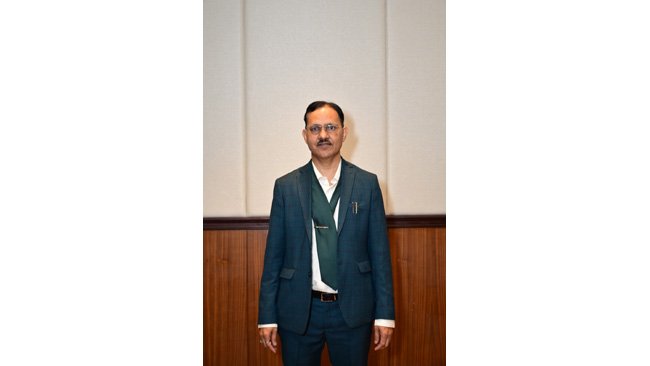
According to Mr Ashok
Chandak, President and CEO - IESA (India Electronics & Semiconductor association)“The AI momentum is inseparable from semiconductor momentum. India
is building the full innovation stack—design, compute, manufacturing, and
deployment—anchored in trust, scale, and sustainability”
But history has repeatedly shown that the nations which shape transformative technologies are rarely the same as those who define the ethical and governance norms surrounding them. PM Shri Narendra Modi ji’saddress at the summit today signals India's clear intent to occupy both roles simultaneously — as a builder and adopter of AI at scale, and as a principled voice for a governance architecture that serves humanity broadly, not selectively. Given where we stand in the AI adoption curve today, this is precisely the right argument, made at precisely the right time.
HonorablePM’s articulation of MANAV — grounding AI governance in moral integrity, accountable institutions, national data sovereignty, inclusive access, and legitimacy — offers the Global South its first coherent counter-narrative to the monopolistic architectures currently shaping AI development. Also his nuclear analogy, invoked at the address, deserves a permanent place in every boardroom and policy chamber: humanity has already proven its capacity to harness and misuse transformative power in the same breath.
For the semiconductor and electronics industry, this overall momentum is transformative. AI leadership depends on secure supply chains for advanced chips, packaging, embedded systems, high-performance computing, and power electronics. India’s expanding fab, ATMP/OSAT, and electronics manufacturing programs—combined with its global leadership in chip design talent—position the country not just as a consumer of AI, but as a design-led innovation and advanced manufacturing hub ready for next-generation nodes, heterogeneous integration, and AI-optimized silicon.
The AI momentum is inseparable from semiconductor momentum. India is building the full innovation stack—design, compute, manufacturing, and deployment—anchored in trust, scale, and sustainability.

© 2019 All Rights Reserved | democraticjagat2019 | Developed By DIIT IT SERVICES & SOLUTIONS